

The Butterfly Effect in Nepalese Politics
How Small Actions Reshape a Nation's Destiny

Amit Khanal. The concept of the Butterfly Effect, originating from chaos theory, suggests that seemingly minor events can trigger massive, unpredictable consequences through complex chains of causation. In Nepal’s turbulent political landscape, this phenomenon has manifested repeatedly, where small decisions and overlooked grievances have snowballed into national crises that continue to shape the country’s trajectory. From the compromises of democratic movements to the unintended consequences of foreign policy decisions, Nepal’s history serves as a compelling case study of how delicate political systems can be dramatically altered by what initially appear to be insignificant actions.
The 1990 People’s Movement (Jana Andolan I) marked a pivotal moment where Nepal’s political trajectory could have taken a fundamentally different path. When mass protests forced King Birendra to accept constitutional reforms, the democratic forces had an opportunity to completely reshape Nepal’s governance structures. However, the critical compromise that allowed the monarchy to retain significant institutional power – particularly control over the military and judiciary – created a fault line that would eventually rupture Nepal’s democratic experiment. This decision, made in what seemed like a moment of pragmatic necessity, established conditions that enabled King Gyanendra’s power grab in 2005, demonstrating how small concessions to authoritarian elements can undermine entire democratic systems.
Similarly, the state’s initial dismissal of the Maoist insurgency as a minor rural disturbance illustrates how failing to address small grievances can lead to catastrophic consequences. What began as localized protests against systemic neglect of Nepal’s rural poor transformed into a decade-long civil war that claimed over 17,000 lives. The government’s heavy-handed response, rather than addressing the root causes of discontent, only served to validate the Maoists’ revolutionary narrative and expand their support base. This pattern of ignoring small problems until they become existential crises has become a recurring theme in Nepal’s political development, with each iteration leaving deeper scars on the nation’s social fabric.
The 2006 People’s Movement (Jana Andolan II) that finally overthrew the monarchy presented another critical juncture where small decisions had outsized impacts. While the movement successfully established Nepal as a federal democratic republic, the political class’s failure to build genuinely inclusive institutions created new fissures in Nepalese society. The rushed constitutional process that marginalized Madhesi and other minority groups led to violent protests and deepened ethnic divisions, showing how exclusionary practices in momentous political transitions can plant seeds for future instability. The inability to learn from past mistakes – particularly the dangers of political exclusion has kept Nepal trapped in cycles of protest and repression.
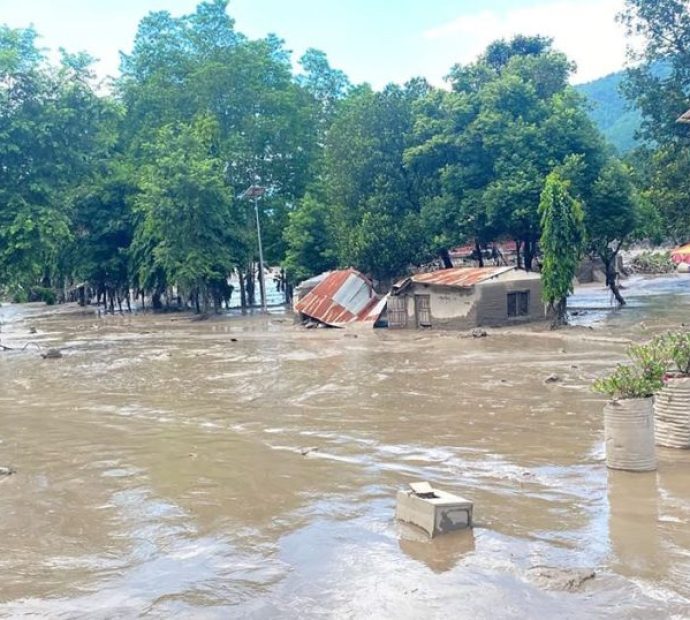
Natural disasters have also served as catalysts for the Butterfly Effect in Nepalese politics, with the 2015 earthquake providing a stark example. What should have been a moment for national unity and rebuilding instead became another case study in how small acts of corruption and political infighting can derail recovery efforts. The mismanagement of reconstruction funds and the politicization of relief efforts not only prolonged suffering but further eroded public trust in government institutions. This failure to respond effectively to crisis created ripple effects that continue to influence Nepal’s development trajectory and governance challenges.
External influences from neighboring powers have amplified these domestic dynamics through their own small but strategic interventions. India’s 2015 blockade, while ostensibly about constitutional concerns, demonstrated how relatively minor geopolitical actions can trigger major domestic political realignments. Similarly, China’s carefully targeted investments and political engagements have created new dependencies that subtly but significantly influence Nepal’s policy choices. These external factors interact with Nepal’s internal vulnerabilities in ways that magnify the Butterfly Effect, making the country’s political system particularly sensitive to small shifts in regional power dynamics.
Looking to Nepal’s future, the persistence of these patterns suggests that the country remains vulnerable to small triggers causing disproportionate impacts. The growing youth exodus, simmering ethnic tensions, and rampant corruption all represent potential flashpoints where minor events could spark larger upheavals. The historical precedent of how small revolutionary movements grew into nationwide insurgencies serves as a warning about ignoring grassroots discontent. At the same time, the potential exists for small positive actions – genuine anti-corruption efforts, inclusive policymaking, or diplomatic breakthroughs – to generate virtuous cycles of reform and stability.
The lesson of the Butterfly Effect for Nepal’s political class is clear: in complex systems, there are no insignificant decisions. What may appear as minor compromises or temporary measures often establish patterns and precedents that shape long-term outcomes. As Nepal continues to navigate its democratic development, recognizing these dynamics could mean the difference between breaking historical cycles of instability and repeating past mistakes. The country’s future may well depend on whether its leaders can develop the foresight to understand how today’s small choices create tomorrow’s political realities.



 Rupee Exchange Rate