

Political Shake-Up : Can Nepal’s Traditional Leaders Keep Up?
Jayaraj Kumar Roy Danuwar
The traditional political players, who once dominated Nepal’s governance, are now facing growing discontent arising from persistent issues such as corruption and unfulfilled promises. This series of disappointments has opened the door for new parties and independent leaders to enter this field, presenting themselves as alternatives with fresh agendas.
Nepal’s political landscape seems to be undergoing a significant transformation due to the rise of new political forces that reflect shifting ideologies and an evolving public consciousness. These emerging forces are promising political change, effective delivery and good governance. Amidst these shifting dynamics, there’s a growing hope among the people for a more responsive leadership in power that addresses pressing societal needs.
As this dynamic is unfolding, it is an opportunity for citizens for the active engagement in shaping their future—a crucial evolution in a country that is rich in history yet longing for progress. This shift is an exciting possibilities towards a more inclusive and effective governance model.
The Current Political Scenario
The current political landscape is very complicated, made up of different aspirations, hopes, and struggles from various political groups and the people. Current Nepal’s political framework, established under the guidance and rules of the 2015 Constitution; the hope was that Nepal’s political setup would lead to a new era of stability and progress.
However, this vision has not materialised as intended. Instead, the nation finds itself trapped in ongoing political instability, characterised by frequent government changes, weak governance structures, and sluggish economic growth.
The lack of policy consistency with relentless power struggles among political elites has severely impacted Nepal’s developmental prospects. Citizens increasingly express their frustration over ineffective governance and decreasing public trust in traditional leadership. This dissatisfaction is promising calls for new leadership and alternatives.
As the landscape evolves, it becomes ever more crucial for stakeholders to reflect on these challenges seriously and seek meaningful solutions that genuinely align with the needs of the people. The path ahead may be uncertain, but it is clear that a significant shift is necessary to restore Nepal’s hopes for a prosperous future.
The Old Players: Legacy of Traditional Politics
For decades, the political landscape has largely been dominated by established parties like the Nepali Congress (NC), the Communist Party of Nepal-Unified Marxist Leninist (CPN-UML), the Maoist Centre, and various Madhes-based parties. These groups were once praised for significant societal transformations, including ending the monarchy, introducing federalism, and implementing key democratic reforms.
Yet, as we gaze upon the present-day political arena, it becomes evident that many of these leaders now tremble with serious difficulties, challenges and workloads. Their failure to govern effectively, involvement in corruption scandals and inability to tackle pressing socio-economic issues have fostered a sense of public dissatisfaction. The players, once distinguished for their visionary roles in bringing about change, now find themselves struggling to uphold their credibility for accountability and efficient governance.
The people’s demand for genuine reform is unmistakable; they’re demanding leaders who will prioritise the needs of everyday citizens over personal agendas. As this voice for effective governance grows louder, it begs the question: can Nepal’s traditional powerhouses adapt to this new landscape, or will they be swept away by a tide of change ? The future holds both uncertainty and potential—a moment for reimagining what leadership means in our nation.
The New Players: A Shift in Political Ideology
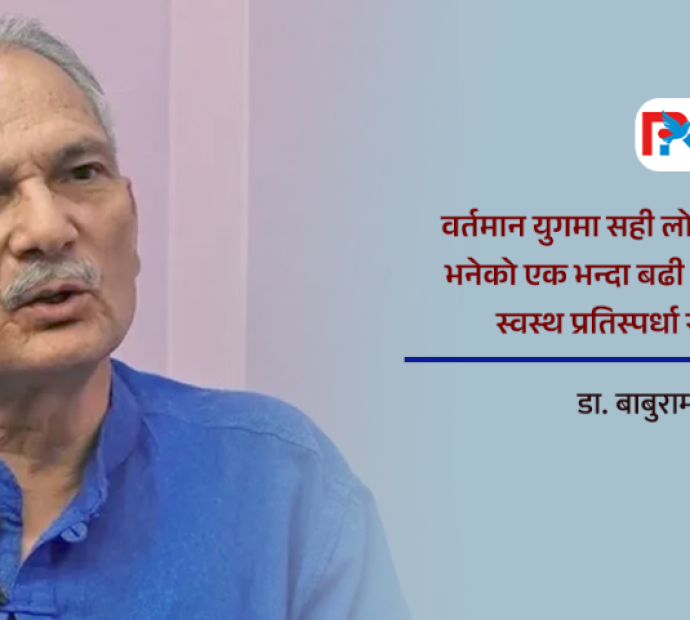
The nation’s political ideology has a transformative shift due to new political forces, a phenomenon that cannot be ignored. When Dr Baburam Bhattarai took the bold step to form Naya Shakti Nepal in 2015, it was a revolutionary attempt to introduce alternative politics in a landscape often dominated by traditional narratives.
Fast forward to the 2022 elections, and we witnessed an intense rise of fresh voices—parties like the Rastriya Swatantra Party (RSP), Janamat Party, Nagarik Unmukti Party (NUP), and independent candidates such as Kathmandu Mayor Balen Shah stepping into politics.
They seem to represent something hopeful, as its in a time when frustrations run high and trust is low.

This shift is historical as it speaks volumes about the evolution of Nepali democracy—a transition from established norms towards innovative ideologies. It’s exciting to witness this blossoming movement, as it indicates a maturing political landscape and engagement of citizens demanding accountability and transparency from their leaders. The New Players have arrived—and it will be exciting to see if they are here to stay!
Old vs. New Agendas : A Battle of Priorities
The present landscape of politics is a tension between old and new agendas. Addressing the pressing needs of the people through a robust agenda centred around economic growth, employment generation, accountability in governance, infrastructure development, as well as delivery and transparency.
As we reflect on this battle of priorities, it’s clear that the future depends on how effectively these new voices can resonate with citizens’ desires for meaningful change and sustainable development while leaving behind the shortcomings of the old players. The call for reform has never been more urgent, encouraging both established parties and newcomers to take responsiblity for what truly matters to those they serve.
The Emergence of the Digital Era- A Game Changer in Politics
Platforms like Facebook, Twitter, Instagram and TikTok are no longer just channels for social interaction; they have evolved into powerful tools for mobilisation, awareness and political engagement. This digital transformation is a trending major shift that is reshaping how leaders connect with the public.
Gone are the days when communication was solely dictated by traditional media outlets or party hierarchies. Today’s new leaders address the immediacy with digital platforms to engage directly with citizens, allowing their messages to go directly to the public, leaving behind conventional structures. This direct connection has empowered Nepal’s youth and independent voices like never before. It’s really inspiring to see how young activists leverage these platforms to advocate for change, raise awareness on critical issues, and rally support among peers.
Individuals can share their perspectives freely and instantly with a wide audience. This direct line of communication is fostering transparency, breaking down barriers typically imposed by party structures.
The digital era has revolutionised communication as technology continues to bridge gaps and inspire a new generation of leaders who are ready to tackle challenges head-on!
The possibilities that technology offers are limitless; it is igniting hope and fostering inclusivity in ways previously unimaginable.
Future Political Landscape: Mission 2084
As we gaze into the future political landscape of Nepal, particularly through the lens of Mission 2084, it becomes evident that the nation is at a pivotal crossroads. The gradual phase-out of old leaders in favour of new-generation leadership signals a transformative shift in governance.
But these emerging political forces should not merely be concerned with maintaining power; they should have a vision with economic prosperity, technological advancement, and global integration. This transition is a crucial element in realising the vision behind Mission 2084—a blueprint aimed at reshaping Nepal’s governance model.
The coming two decades will be critical in determining whether Nepal can break free from its historically cyclical patterns of instability. Mission 2084 is an ambitious objective—a governance model rooted in development and efficiency. The success of this vision depends on innovative leadership and the collective willingness of its citizens to support progressive policies that prioritise growth and inclusivity.
Nepal stands on the edge of potential recalibration; with courage and resolve, it can reshape its political narrative to foster an environment where young leaders thrive, ideas flourish, and integrity governs all actions. Only time will reveal if this hopeful trajectory can be upheld as we move toward 2084—a year that could redefine what it means to govern in Nepal.
The next phase of Nepal’s political evolution will be defined by leadership that prioritises results. The aim is straightforward: governance must serve the interests of the people rather than those of political elites. In this major shift, there lies an opportunity to foster transparency and build trust between leaders and citizens.
As we advocate for effective policies and innovative solutions, the goal remains clear—creating a framework where every Nepali feels empowered and heard.
 Rupee Exchange Rate