

Polarization in Nepalese Politics : A Threat to the 2027 Elections
Amit Khanal
As I sit down to reflect on the state of Nepalese politics in 2025, one thing is painfully clear: the air is thick with division. The “us vs. them” narrative, a tried-and-tested tactic for quick political gain, has woven itself into the fabric of Nepal’s political landscape.
It’s not just a strategy; it’s a weapon, wielded with precision by political actors to rally supporters, demonize opponents, and deepen societal fractures.
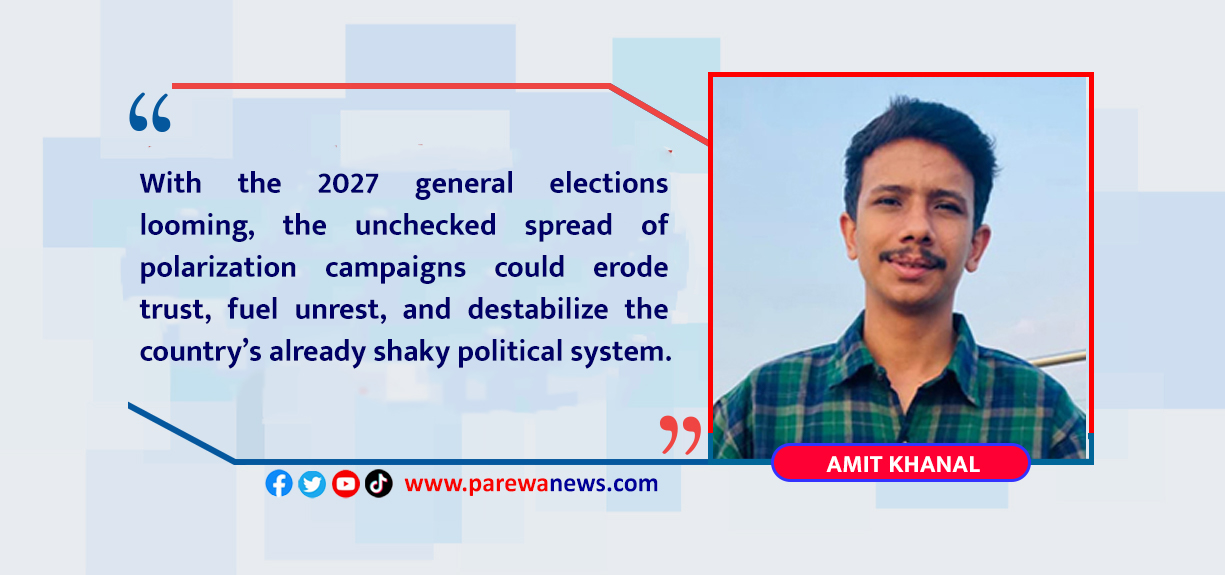
As a political analyst, I’ve seen this playbook before, but in Nepal’s fragile democracy, its consequences feel more urgent than ever. With the 2027 general elections looming, the unchecked spread of polarization campaigns could erode trust, fuel unrest, and destabilize the country’s already shaky political system.
If ordinary Nepalese folks like you and me don’t wake up to this now, the fallout could reshape the nation’s future in ways we might not recover from easily. Let’s unpack how this divisive narrative is taking hold, why it’s so effective, and what it could mean for 2027 if awareness doesn’t catch up.
The Anatomy of Polarization in Nepal
Polarization campaigns thrive on creating clear lines: “us” (the righteous, the pure, the downtrodden) versus “them” (the corrupt, the outsiders, the elite). In Nepal, this tactic is as old as its multiparty democracy, but it’s gained new ferocity in recent years. Political parties, from the Nepali Congress (NC) to the Communist Party of Nepal-Unified Marxist Leninist (CPN-UML), have long leaned on identity politics caste, ethnicity, region, and religion to carve out loyal voter bases. But in 2025, the narrative has become sharper, fueled by social media and a growing disillusionment with governance. The 2022 elections, with a voter turnout of just 61% (down 10% from 2017), signaled a public weary of politics-as-usual, creating fertile ground for populist leaders to exploit divisions.
Take the rise of the Rastriya Swatantra Party (RSP), for instance. Its anti-corruption crusade paints the “old guard” (NC, CPN-UML) as corrupt elites, while positioning itself as the voice of the “pure” people. This rhetoric resonates with young Nepalese frustrated by economic stagnation and political infighting. Meanwhile, pro-monarchy protests in 2025, backed by figures like former King Gyanendra Shah, have stoked a Hindu nationalist narrative, pitting “traditionalists” against “secular republicans.” These protests, which turned violent in Kathmandu, saw buildings set ablaze and two lives lost, showing how quickly divisive rhetoric can spiral. The “us vs. them” narrative isn’t just about domestic players it’s also tangled in geopolitics. Allegations of foreign interference, particularly from India and China, are weaponized to paint rival parties as “traitors” beholden to external powers. For example, the 2022 ratification of the U.S.-backed Millennium Challenge Corporation (MCC) grant sparked fierce debate, with Maoist factions framing it as a betrayal of Nepal’s sovereignty, deepening mistrust between coalitions.
Why Polarization Works in Nepal
Why does this tactic hit so hard? Nepal’s social and political fabric makes it a perfect storm for polarization. Decades of civil war, a fragile transition to federalism, and persistent economic challenges have left deep scars. Over 30% of Nepalese live in poverty, and remittances from migrant workers while propping up the economy highlight the lack of local opportunities. When people feel desperate, they’re more likely to cling to leaders promising simple solutions. Polarization thrives here because it offers clarity in chaos: “If only they weren’t in the way, we could fix this.”
Social media has supercharged this. In 2022, misinformation campaigns flooded platforms with doctored images and forged documents targeting political leaders and even the former U.S. ambassador, stoking anti-American sentiment. Senior journalists warn that organized disinformation is only getting worse, and without awareness, it’s easy for ordinary Nepalese to fall into the trap of believing these narratives. The RSP’s rise, for instance, owes much to its savvy use of digital platforms to amplify its “outsider” image, while pro-monarchy groups have circulated old videos of Indian leaders to falsely claim foreign backing. This isn’t just noise it’s a deliberate strategy to deepen divides.
The Players and Their Playbooks
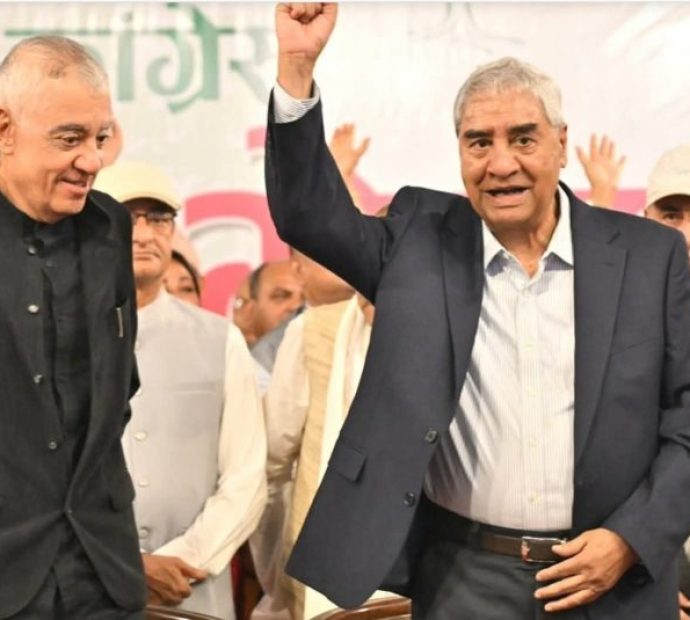
Let’s zoom in on the key actors. The NC and CPN-UML, the two largest parties, have mastered the art of coalition politics, but their alliances are often more about power than principle. In 2024, their coalition ousted Prime Minister Pushpa Kamal Dahal (Prachanda), replacing him with K.P. Sharma Oli, who now shares power with NC’s Sher Bahadur Deuba until 2027. This deal-making, while pragmatic, fuels public cynicism, as it prioritizes elite interests over governance. The RSP, meanwhile, has disrupted this dynamic by framing itself as anti-establishment, but its own leaders, like Rabi Lamichhane, face scrutiny for sidestepping legal accountability, muddying their “pure” image.
Then there’s the monarchy movement, a wildcard in 2025. Pro-monarchy protests, fueled by dissatisfaction with corruption and governance, have revived calls for a Hindu state. These groups exploit cultural identity, casting republicans as “outsiders” eroding Nepal’s heritage. The former king’s silence and reported encouragement of these protests adds fuel to the fire. Geopolitically, the “us vs. them” narrative gets murkier. Prime Minister Oli’s pro-China leanings, highlighted by his 2024 Beijing visit, contrast with NC’s warmer ties with India, creating a domestic fault line where parties accuse each other of selling out to foreign powers.
The Stakes for 2027
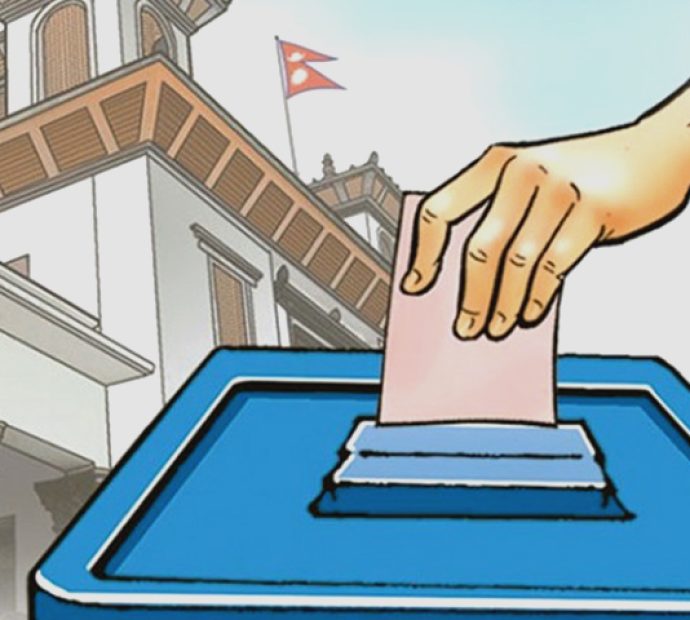
If polarization continues unchecked, the 2027 elections could be a flashpoint. First, voter trust is already eroding. The 2022 elections saw independent candidates gain ground, reflecting frustration with traditional parties. If divisive narratives deepen, turnout could drop further, giving fringe groups monarchists, populists, or even Maoist factions outsized influence. Second, the risk of violence is real. The 2025 pro-monarchy riots are a warning: polarized rhetoric can ignite unrest, especially in a country with a history of civil conflict. Third, economic recovery could stall. Nepal’s 4% growth in 2024, driven by tourism and remittances, is fragile. Political infighting and populist promises could deter investment and derail infrastructure projects like the MCC-funded electricity grid.
Most worryingly, foreign interference narratives could dominate the 2027 campaign. If parties continue framing rivals as puppets of India, China, or the U.S., it could inflame nationalist sentiments, making rational policy debates impossible. The MCC controversy showed how foreign aid can become a lightning rod, and with U.S. aid now uncertain under President Trump, Nepal’s balancing act between India and China could tip further into divisive rhetoric. Without public awareness, these narratives will only deepen mistrust, leaving voters vulnerable to manipulation.
What Happens If We Stay Unaware?
As ordinary Nepalese, it’s easy to feel powerless in this mess. We’re busy working, raising families, or just trying to get by. But ignorance is what polarization campaigns bank on. If we don’t question the “us vs. them” stories flooding our WhatsApp groups or TikTok feeds, we risk becoming pawns in a game where elites whether politicians, monarchists, or foreign actors hold all the cards. By 2027, a deeply divided electorate could hand power to those best at stoking fear, not those with solutions. The monarchy movement, for instance, could gain traction not because most Nepalese want a king, but because frustration with the status quo makes their narrative seductive.
Worse, unchecked polarization could weaken Nepal’s young federal democracy. The 2015 Constitution, meant to unify the nation, is still a work in progress, with provincial governments underfunded and federalism contested. If ethnic, regional, or religious divides are weaponized further, the system could buckle, paving the way for authoritarian voices be it monarchists or populist upstarts to exploit the chaos.
A Path Forward: Awareness and Action
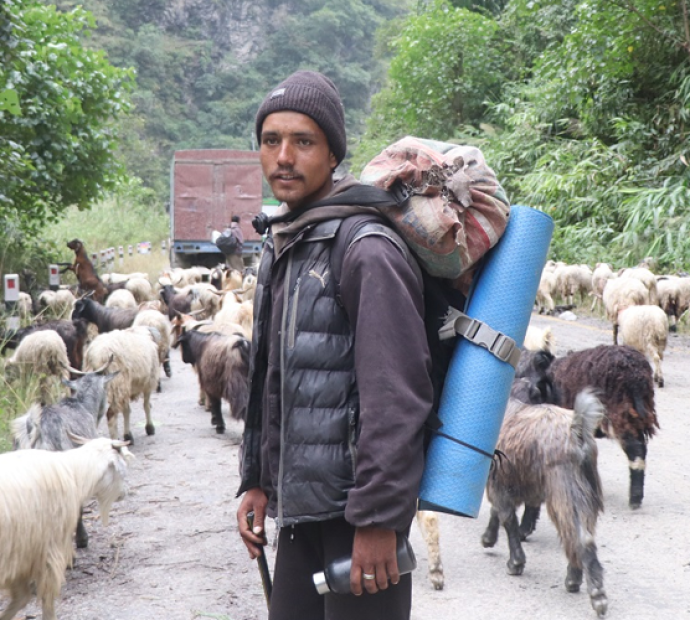
So, what can we do? First, we need to get skeptical not cynical, but curious. Check the source of that viral post claiming a politician is a foreign agent. Cross-reference it with credible outlets or platforms like Nepal Check, which fact-checks election-related misinformation. Second, demand more from leaders. The NC-UML coalition has a chance to stabilize Nepal until 2027, but only if it prioritizes governance over power games. Civil society NGOs like Aama Samuha or Maiti Nepal can amplify marginalized voices and bridge divides, but they need support. Finally, talk to each other. Polarization thrives when we stop listening. A farmer in Karnali and a shopkeeper in Kathmandu might feel worlds apart, but their struggles poverty, lack of opportunity are shared. Building that common ground is how we resist the “us vs. them” trap.
Conclusion
Nepal in 2025 is at a crossroads. Polarization campaigns, with their seductive “us vs. them” narratives, are tearing at the seams of a democracy still finding its footing. From populist upstarts to monarchist revivals, the players are many, and the stakes are high. If we, as ordinary Nepalese, don’t wake up to these tactics, the 2027 elections could deepen divisions, spark unrest, and stall progress. But awareness is power. By questioning narratives, demanding accountability, and rebuilding trust, we can steer Nepal toward a future where unity, not division, defines our politics. The clock is ticking let’s not wait until 2027 to act.
 Rupee Exchange Rate